Standing facing each other across the Lombok Strait, Mount Agung in Bali and Mount Rinjani in Lombok are the two most iconic volcanic giants in the Nusa Tenggara and Bali region. So close are they geographically that the majestic silhouette of Mount Rinjani can be clearly seen from the summit of Mount Agung on a clear day—and vice versa.
However, for trekkers and cultural explorers, these two volcanoes offer very different characters of adventure and spiritual meaning. Understanding the differences between the two will help you prepare physically, logistically, and in terms of respect for local wisdom before stepping onto the trekking trail.
1. Comparison of Trekking Aspects
Although both are classified as challenging active stratovolcanoes, the format of the trekking journey on Mount Agung and Mount Rinjani is diametrically opposed.
Mount Agung (Bali): A Steep and Intense Full-Day Trek
At an elevation of 3,142 meters above sea level (masl), Mount Agung is the highest point on the island of Bali.
- Duration & Format: The Mount Agung trek is generally done in the format of a midnight trek without camping. Trekkers start walking at around 23.00 or 01.00 in the morning in order to reach the summit right at sunrise, then descend again the same day (total journey 8–12 hours).
- Terrain Characteristics: The route is famously very steep from the start without much of a bonus of gentle sections. After passing the forest boundary, trekkers will face directly large rocky terrain and slippery volcanic sand up to the crater rim.
- Logistics: Since there is no overnight stay on the mountain, trekkers only need to carry a daypack (daypack) containing water, snacks, a warm jacket, and a headlamp (headlamp), without requiring tent porters or heavy cooking equipment.
Mount Rinjani (Lombok): A Multi-Day Expedition with Complete Landscapes
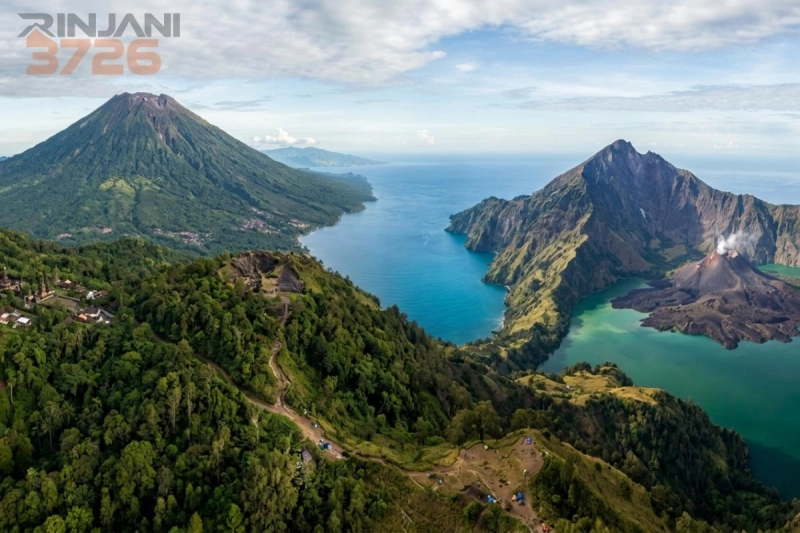
Rising to 3,726 masl, Mount Rinjani is the second-highest volcano in Indonesia and is part of the UNESCO Global Geopark network.
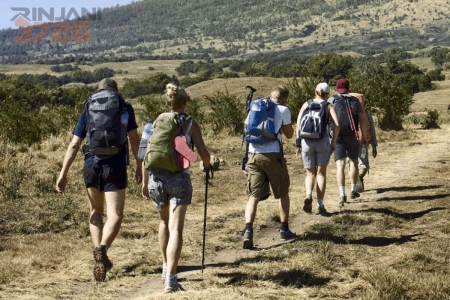
- Duration & Format: Trekking Rinjani is a camping expedition (multi-day camping trek) that generally takes 2 days 1 night to 4 days 3 nights.
- Terrain Characteristics: Rinjani offers a much broader variety of ecosystems—from the dense tropical rainforest on the Senaru route, vast stretches of savanna on the Sembalun route, majestic crater walls, the blue-green Lake Segara Anak, natural hot springs, to the legendary volcanic sandy ridge route (letter E) leading to the true summit.
- Logistics: This trek requires full logistical support, from tents, sleeping bags (sleeping bag), cooking equipment, to a team of local guides and porters who carry the equipment and prepare fresh meals on the mountain.
2. Comparison of Cultural and Spiritual Values
These two mountains are not only viewed as natural tourism destinations, but as spiritual axes that are deeply sacred to the local communities, with different traditions.
Mount Agung: The "Axis of the World" and the Abode of the Balinese Hindu Gods
For Hindus in Bali, Mount Agung is the physical representation of Mount Mahameru, the center of the universe in Hindu cosmology.
- Pura Agung Besakih: On the slopes of this mountain stands Pura Besakih, the largest and holiest temple in Bali, which serves as the main center of worship for the entire Balinese Hindu community.
- Taboos & Sanctity of the Route: Mount Agung is considered a highly sacred area (kaja). Trekkers must comply with strict customary rules, such as the prohibition on trekking during major ceremonies at Besakih, the prohibition on bringing food made from beef, the prohibition on speaking harshly, as well as the prohibition on trekking for women who are menstruating.
Mount Rinjani: Harmony of Wetu Telu Islamic Tradition and Lombok Hinduism
On the island of Lombok, Mount Rinjani is revered as a sacred place by two major communities at once: the Sasak people (the indigenous inhabitants of Lombok) and the Hindus of Lombok.
- Legend of Dewi Anjani: In the beliefs of the Sasak people, the summit of Rinjani is believed to be the supernatural palace of Dewi Anjani, the queen ruling over spirits and the guardian of the island of Lombok who maintains the balance of nature and the fertility of the island.
- Mulang Pekelem Ritual: Every year, both the Sasak traditional community (including the Wetu Telu community in Bayan and Sembalun) and Hindus hold an offering ceremony on the shores of Lake Segara Anak called Mulang Pekelem—a ritual of casting offerings into the lake as a form of gratitude for the gift of water and to pray for safety and rain for agriculture.
- Trekking Ethics: Trekkers are reminded to preserve nature, not to litter (as it is considered to defile the sacred dwelling of the ancestors), and to maintain good manners while in the lake area or at the summit.
Conclusion: Which Adventure Suits You?
- Choose Mount Agung if you are in Bali with limited time, enjoy an intense physical challenge in a single night (one-day push), and want to experience the sacred atmosphere of the spiritual center of Balinese Hindus.
- Choose Mount Rinjani if you crave a thorough camping adventure in the wild, want to enjoy the complete package from savanna, crater lake, hot springs, to standing on one of the highest peaks in Indonesia.
Many adventure travelers even combine both in a single holiday trip. Conquering Mount Agung as a warm-up in Bali, then crossing over to Lombok to experience the majestic expedition on Mount Rinjani. Let's plan your trek together with Rinjani3726