Trekking Mount Rinjani in Lombok is an adventure that tests both physical and mental strength. However, many trekkers—especially those setting foot on this 3,726-meter-high mountain for the first time—often underestimate one of the most crucial elements of their gear: hiking boots.
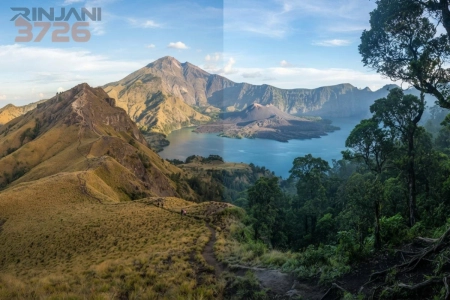
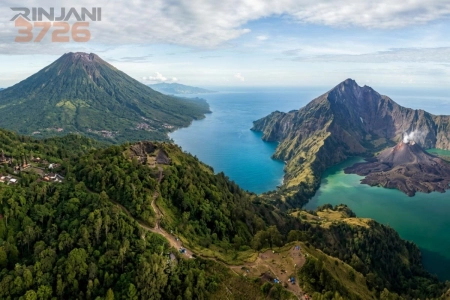
Unlike the mountains in Java, which are dominated by solid ground, Rinjani has a combination of extreme terrain. From slippery roots in the tropical forest of Senaru, dusty savanna in Sembalun, steep rocks toward Lake Segara Anak, to its toughest challenge: loose volcanic sand and gravel during the summit attack.
Choosing the wrong boots not only makes you prone to slipping on the sandy trail, but also risks causing severe blisters, blackened toenails, and even ankle injuries. So that your journey to the roof of Lombok remains safe and comfortable, check out the complete guide to choosing the right hiking boots for Rinjani below!
1. Choose a Mid-Cut or High-Cut for Ankle Protection
For Rinjani's varied and unpredictable terrain, mid-cut (covering the ankle) or high-cut (above the ankle) boots are highly recommended over low-cut ones.
- Why is it important? When descending from the summit through deep volcanic sand and gravel, your feet will often sink. The high boot collar supports the ankle so it is less prone to spraining, while also minimizing the entry of sand and small gravel into the boot.
2. Pay Attention to the Outsole Pattern and Lug Depth (Boot Tread)
This is the main key to keeping you from slipping! Never use regular running shoes or casual shoes to climb Rinjani.
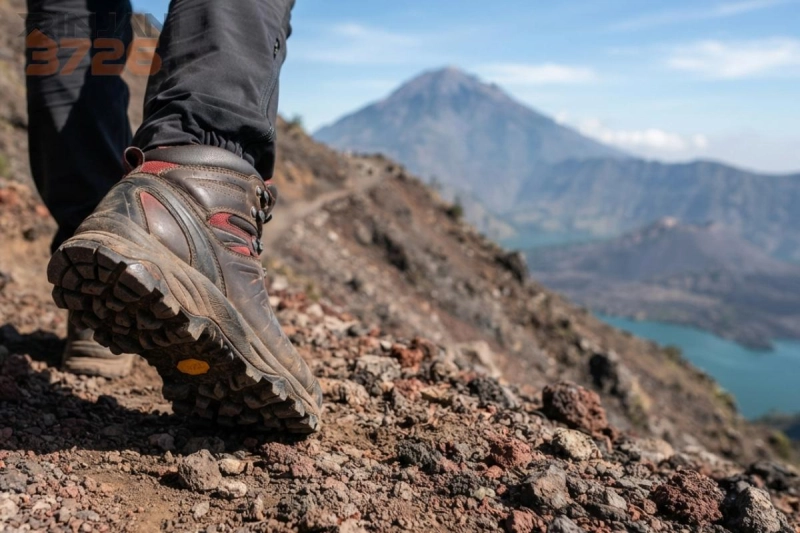
- Check the bottom of the boot: Make sure the boot has a deep lug pattern (at least 4–5 mm) and sufficiently wide spacing between the lugs. This design helps the sole "bite" firmly into loose sand and wet soil, and prevents it from getting easily clogged with mud.
- Rubber material: Look for an outsole made of high-quality rubber (such as Vibram technology or special outdoor vulcanized rubber) that offers maximum grip on slippery rocky surfaces.
3. Must Have Waterproof Yet Breathable Features
The weather on Mount Rinjani is very hard to predict. You can start the trek under the scorching sun of the Sembalun savanna, then suddenly be drenched by heavy rain on the Senaru forest trail or hit by frost at Plawangan.
- Choose boots with a waterproof membrane (such as Gore-Tex or similar waterproof technology) so your feet stay dry when crossing puddles, morning dew, or rain.
- Also make sure the upper material has good air circulation (breathable) so your feet don't get sweaty and damp easily—because damp foot skin is the main cause of blisters.
4. Leave Room (Go Up 0.5 to 1 Size from Your Normal Size)
A classic mistake trekkers make is buying hiking boots in a size that is too snug (fit).
- The golden rule: Leave about 1 to 1.5 cm of room at the tip of the toes (or go up 0.5–1 size from your daily shoe size).
- When descending from the Rinjani Summit or heading down to the steep Lake Segara Anak, your toes will be pushed forward against the front of the boot. This extra room—plus the use of thick trekking socks—will protect your toenails from bruising or coming off.
5. Make Sure the Toe Cap Construction Is Strong
The trail to the summit and the descent to Lake Segara Anak are filled with sharp and irregular volcanic rocks. The ideal hiking boot for Rinjani must have a hard protective rubber layer at the front (rubber toe cap). This feature really saves your toes when you accidentally kick a rock while exhausted.
Bonus Pro Tips: Mandatory Preparation Before D-Day!
Having the best boots alone is not enough if you wear them straight out of the box to climb. Do these two things before departing for Lombok:
- Do a Break-in: Use your new boots for casual walks, going up and down stairs, or light trekking for at least 2–3 weeks before departure. This is aimed at softening the boot material so it conforms to the shape of your feet.
- Use Gaiters (Additional Foot Protection): During the summit attack on Rinjani, attach gaiters to your boots and ankles. This simple tool is very effective at preventing volcanic sand from getting into your boots so you don't have to stop repeatedly just to empty the sand.
Ready to Step Toward the Rinjani Summit?
The right hiking boots are the best investment for the safety and comfort of your adventure. If your footwear is sorted out, make sure your logistics, porter, and trekking route planning are also handled by the experts.
Still confused about determining the best route between Sembalun or Senaru, or need a practical and safe Rinjani trekking package? Contact our team now! We are ready to help design your dream trekking journey to the roof of Lombok with professional and memorable service.